In This Article
Quick answer: A custom retail display with an LCD screen must be developed as one complete merchandising system. The screen size, content source, power supply, product layout, structure, cable path, service access and packing method all affect one another. Confirming only the screen specification is not enough. The finished fixture must present the physical products clearly, play the required digital content reliably and remain practical for assembly and daily retail use.
This guide explains the main points buyers should confirm before developing a screen-integrated retail display. It also uses a completed DNY DISPLAY watch-display project to show how the screen, products and supporting structure can work together in a real production order.
What Is the Purpose of the LCD Screen?
Before selecting a screen, define what it needs to achieve in the retail environment. An LCD screen may be used to play a brand film, introduce product features, demonstrate how a product works, present campaign visuals or support a new collection launch.
The purpose of the content affects the screen position and its relationship with the products. A large and bright screen may attract attention, but it should not visually overpower the merchandise. For watches, jewelry and other premium products, the screen normally works best as a supporting communication area rather than the only focal point.
Before developing the structure, buyers should confirm:
- The type of content to be displayed
- Whether the content includes videos, still images or both
- The expected viewing distance and viewing angle
- Whether audio is required or should remain disabled
- How frequently the content will be updated
- Whether different stores or regions will use different content
- Who will prepare and upload the media files
These answers provide a clearer starting point for both the display structure and the screen specification.
Choose the Screen Around the Content and Fixture Size
The screen should fit the available display area without reducing the space required for products. Screen size alone does not determine the final module size because the housing, bezel, control board, power connection and access space must also be considered.
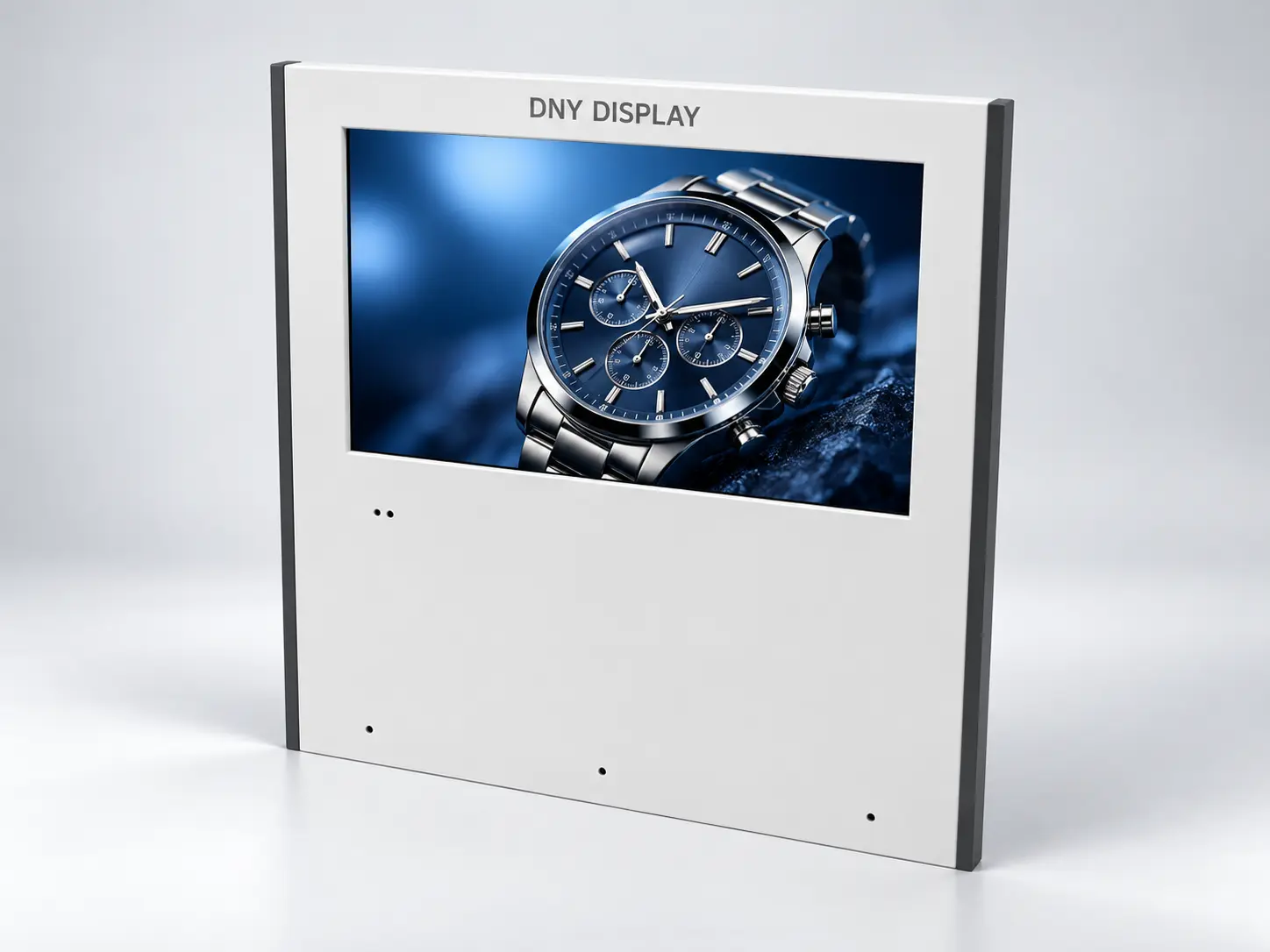
Resolution and aspect ratio should match the artwork or video that the brand plans to use. For example, the completed DNY DISPLAY watch project used a 15.6-inch LCD screen with 1920 × 1080 Full HD resolution and a 16:9 aspect ratio. The LCD module measured approximately 396 × 228 × 28 mm and was integrated into a separate painted MDF back panel.
When requesting a quotation, do not provide only the diagonal screen size. Confirm the following details wherever possible:
- Visible screen size and complete module dimensions
- Resolution and aspect ratio
- Horizontal or vertical orientation
- Required viewing angle
- Media input method
- Automatic playback and looping requirements
- Supported media file formats
- Storage capacity
- HDMI or external-player requirements
- Remote-control or button access
- Destination-market voltage and plug requirements
If the content has already been prepared, sharing a sample media file can help the display manufacturer and screen supplier check compatibility before production.
Decide How the Digital Content Will Be Updated
The most suitable content-update method depends on how the display will be used. Some stores may only need to insert a USB drive or SD card, while other displays may connect to an external media player through HDMI.
A network-connected content-management system may be suitable for certain multi-store programs, but it also introduces additional hardware, software and technical-support requirements.
The LCD screen used in the DNY DISPLAY watch-display project supported USB 2.0 and SD-card media input, with HDMI input also available. This gave the buyer several ways to supply content without making the display permanently dependent on one media source.
Before confirming the screen, buyers should decide:
- How often the content will be changed.
- Whether store staff or a central team will update it.
- Whether every store will play the same media.
- Whether playback must begin automatically when the power is switched on.
- Whether the media ports and control buttons remain accessible after assembly.
A screen may meet the basic size requirement but still be inconvenient in store if the USB port, SD-card slot or control buttons are blocked by the surrounding structure.
Design the Product Layout Before Finalizing the Screen Position
An LCD screen should be positioned around the product layout rather than added after the fixture has already been designed. The manufacturer needs to know the product dimensions, quantity, spacing and preferred viewing height before confirming the screen position.
In the DNY DISPLAY project, each completed display set had to hold 70 watches. A single flat surface would have made the presentation appear dense and repetitive. The fixture therefore used stepped central and side platforms to create several product levels.
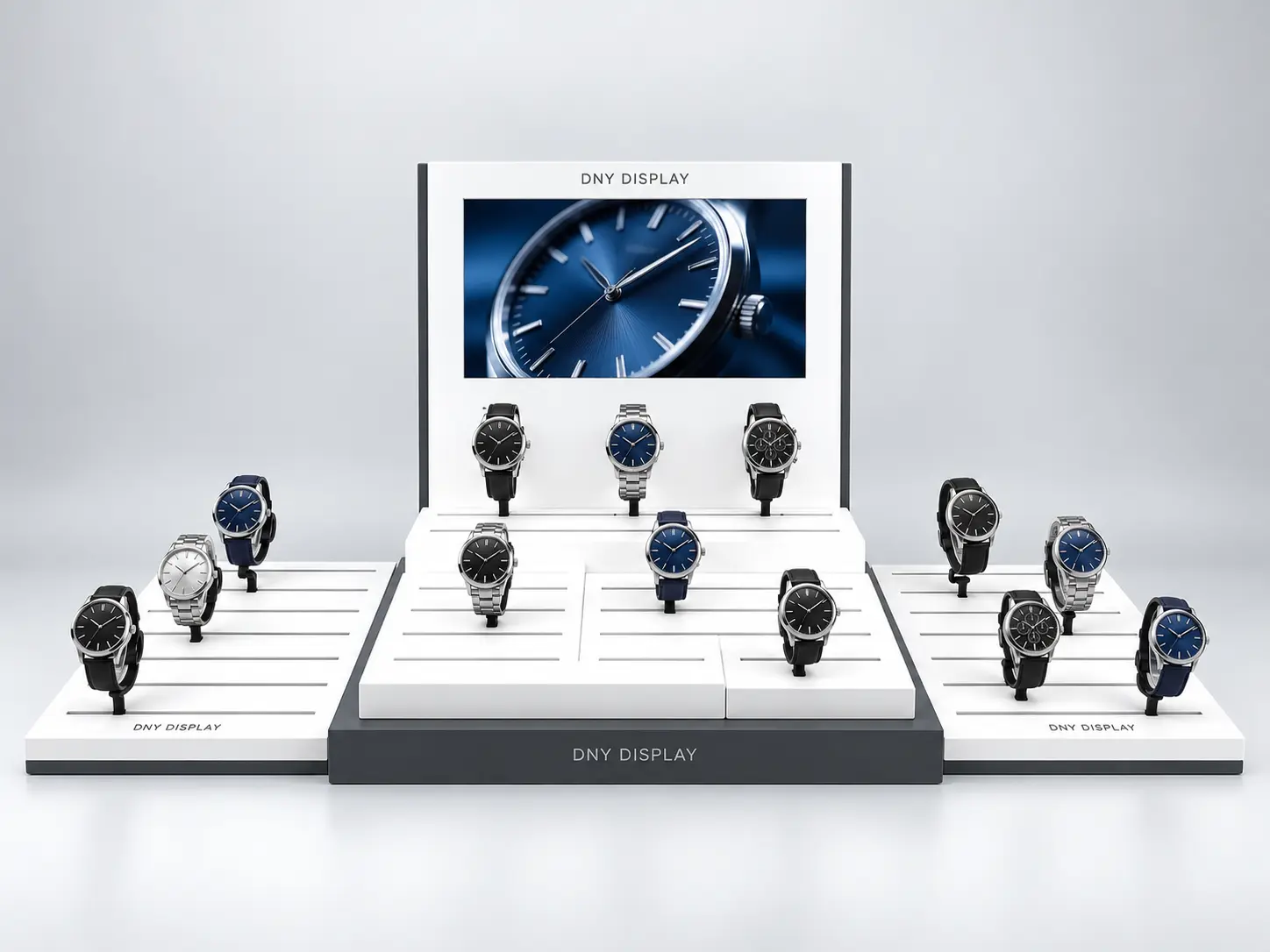
Each watch was supported by a black dip-coated metal C-ring holder. Routed horizontal slots and aluminum channels allowed the holders to be inserted and repositioned across the painted MDF panels.
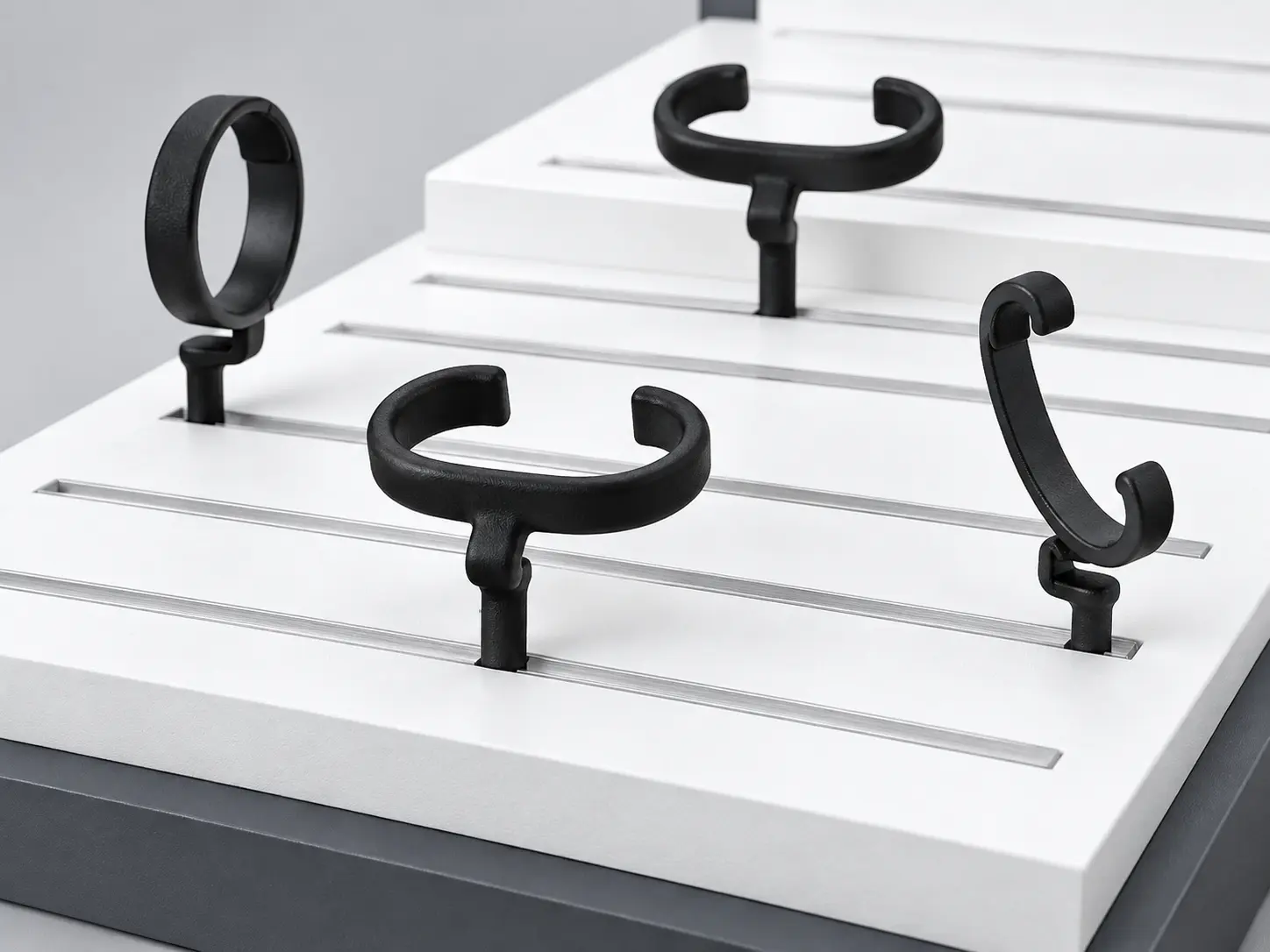
This adjustable system gave the retailer more control over watch spacing than a fixed-hole structure. The same principle can be applied to other custom watch displays when the product arrangement may change between collections.
For a new project, buyers should provide:
- Product dimensions and weight
- Required number of products per fixture
- Minimum space between products
- Preferred product angle and orientation
- Security or tethering requirements
- Replaceable graphics, price labels or accessories
- Areas that customers and store staff need to reach
The screen, logo and products should create a clear visual hierarchy. These elements should not compete for the same presentation space.
Should the LCD Back Panel Be Fixed or Removable?
A permanently fixed screen can create a clean appearance, but it may make assembly, servicing and replacement more difficult. A removable screen panel is often more practical when the fixture will be shipped internationally or installed across several stores.
For the 130-set watch-display order, the LCD screen was integrated into a separate MDF back panel. The complete back panel was secured to the central base with removable screw fasteners. The left and right display platforms were also separate components that connected to the central structure.
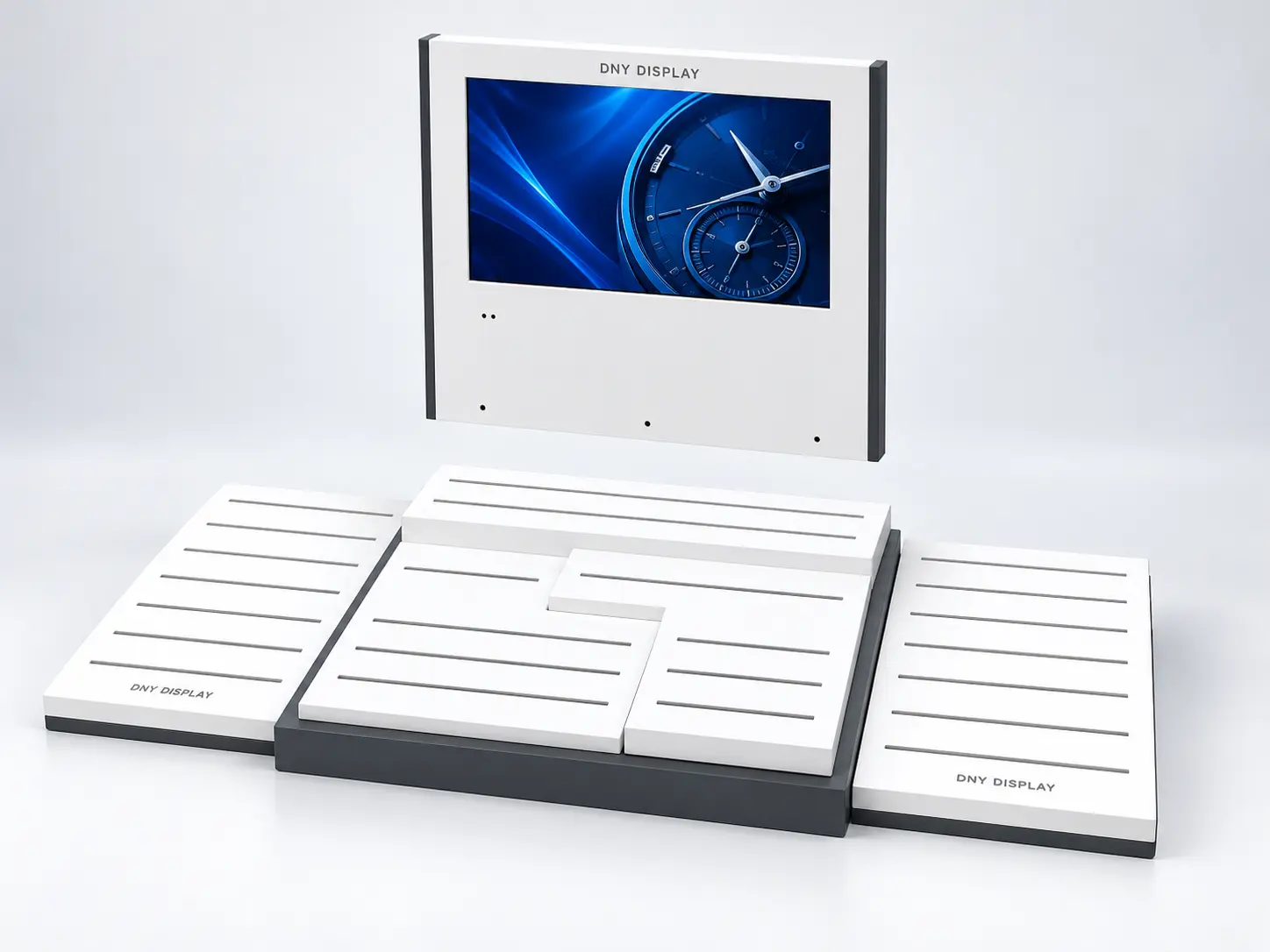
This modular construction provided several practical advantages:
- The electronic section could be separated from the main display body.
- The screen panel could be accessed without dismantling all product platforms.
- The individual modules were easier to arrange during assembly.
- A damaged electronic component would not automatically require replacement of the complete fixture.
- The screen and painted display components could receive suitable protection during packing.
However, a removable structure must still feel secure after installation. Connection positions, screw access, alignment, stability and cable routing should therefore be checked on the physical prototype.
Plan the Power Supply, Cable Path and Service Access
Power and cable planning should begin during structural development. If these details are left until the final stage, visible wires, blocked connectors or insufficient service access can weaken an otherwise premium presentation.
The screen in the completed watch-display project operated on 12V DC through a power adapter accepting AC 100–240V at 50/60Hz. For every new project, the final adapter, plug type and applicable electrical or retailer requirements should be confirmed according to the destination market.
The drawing and prototype should also confirm:
- Where the power adapter will be positioned
- Where the cable enters and exits the display
- How excess cable will be managed
- Whether the power switch remains accessible
- Whether the media ports can be reached after installation
- How the screen and control board can be removed for servicing
- Whether the structure provides the required ventilation
- Whether cables are protected from pulling, pinching and sharp edges
If the display will be installed against a wall or at the rear of a retail counter, the available clearance should be checked before finalizing the back-panel depth and cable direction.
Select Materials and Finishes as Part of the Screen Integration
The supporting structure must hold the screen securely while maintaining the required brand appearance. MDF is frequently used for custom counter displays because it can be machined into stepped platforms, routed slots and recessed areas before receiving a painted finish.
The real watch-display project used a white-and-gray MDF structure. The gray lower sections provided visual support, while the white upper platforms created a brighter presentation surface around the watches.
A consistent matte-painted finish helped the separate modules appear as one coordinated retail display after assembly.
Other projects may use metal, acrylic, wood veneer or mixed materials. The material selection should be evaluated according to:
- Screen weight and mounting method
- Overall fixture dimensions
- Required edge and surface quality
- Expected retail lifespan
- Order quantity and production method
- Assembly and servicing requirements
- Packing and international shipping conditions
The fit around the screen is also important. Uneven gaps, misaligned openings or an overly tight housing can make the electronic module difficult to install or replace.
Coordinate the Logo, Screen and Products
An LCD screen already introduces movement, light and visual information. Adding an oversized logo or too many printed graphics can make the complete display feel crowded.
For the watch project, customer branding was applied through silk-screen printing. The logo positions were coordinated with the LCD back panel and lower display platforms so the branding remained visible without competing with the watches or digital content.
During artwork approval, buyers should confirm:
- Logo size and exact position
- Print color or Pantone reference
- The relationship between the physical logo and on-screen branding
- Whether the logo remains visible after all products are installed
- Whether the logo is applied to a removable or permanent component
- Whether future campaigns require replaceable graphic areas
The physical fixture should still communicate the brand clearly when the LCD screen is switched off.
What Should Be Tested on the Prototype?
A rendering can show the proposed appearance, but it cannot fully verify how the electronics, removable components and real products interact. A physical prototype is especially important for a custom retail display with an LCD screen.
Product Presentation
Install the actual products, or accurate size-and-weight samples, and confirm the display capacity, spacing, viewing angles and customer access. Adjustable holders should remain secure in different positions.
Screen and Media Function
Test the intended media files, image orientation, playback sequence, input ports, controls and power-on behavior. Review the screen from the expected store viewing distance rather than only from close range.
Structure and Assembly
Assemble and remove every detachable component. Check screw positions, back-panel alignment, structural stability, cable clearance and the time required for installation.
Appearance and Workmanship
Check the color, gloss level, painted edges, screen opening, logo position and gaps between modules. The fixture should appear unified even when it consists of several removable sections.
Packing Protection
Confirm how the screen, back panel, product platforms, holders, power adapter and accessories will be protected and identified. Electronics may require different protection from painted MDF or metal components.
How Is an Approved Design Controlled During Production?
Moving from one approved sample to a 130-set order requires more than repeating the exterior shape. Materials, screen modules, routed slots, aluminum channels, C-ring holders, logo positions and removable connections all need to remain consistent.
The completed DNY DISPLAY project required 70 holders per set. A total of 9,100 black dip-coated metal C-ring holders therefore had to be produced and checked across the complete order.
Small differences in holder shape, coating or channel fit could affect the final product arrangement when multiplied across this quantity.
For a multi-store production order, the manufacturer and buyer should confirm:
- The approved sample and final drawing used as the production standard
- Approved material, color and finish references
- The confirmed screen model and policy for any substitute components
- The media-function testing method
- The number of holders and accessories supplied with each set
- Assembly instructions and spare-part requirements
- Inspection points for each completed display
- Packing identification for store distribution
Electronic functions should be tested, while structural parts should be inspected for dimensions, alignment, finish and assembly before packing.
A Real DNY DISPLAY Project: 130 Watch Displays with LCD Screens
DNY DISPLAY developed a high-capacity watch presentation system for a client in the Middle East. The finished fixture measured approximately 960 × 428 × 469 mm and combined white-and-gray matte-painted MDF, a removable 15.6-inch Full HD LCD screen, stepped presentation platforms and 70 adjustable C-ring watch holders per set.
The project progressed through technical discussion, drawing development, sample production, confirmation and completion of the 130-set production order. The complete development and purchasing cycle took approximately seven months.
This seven-month period was the total project cycle for this particular order. It should not be interpreted as the standard production lead time for every LCD retail display. The schedule for a new project will depend on its structure, screen sourcing, electronics, quantity, sample revisions and approval process.
The most important result was not the LCD screen alone. It was the coordination of digital content, a high-capacity product layout, adjustable holders, modular construction, branding and repeatable production within one complete retail fixture.
See the finished structure and detailed specifications in the complete custom watch display stand with a 15.6-inch LCD screen case study.
What Information Should Buyers Send for a Quotation?
To receive a useful initial review for a custom LCD retail display, provide as many of the following details as possible:
- Product type, dimensions and weight
- Number of products displayed per fixture
- Available counter or floor space
- Preferred overall dimensions
- Reference images, drawings or brand guidelines
- LCD screen size and orientation
- Required resolution and media inputs
- Video, image or audio requirements
- Destination-market voltage and plug type
- Preferred materials, colors and finishes
- Logo artwork and preferred branding method
- Required quantity for each design or store
- Assembled or knock-down preference
- Delivery country and target schedule
- Retailer-specific electrical, safety or packing requirements
A complete CAD drawing is helpful but is not always required for the initial discussion. A reference image, product information, target quantity and clear functional requirements are enough for DNY DISPLAY to begin reviewing the project direction.
Frequently Asked Questions
Can the LCD screen be replaced after installation?
The screen can be replaceable if the surrounding structure, fasteners, input ports and service access are designed for removal. This should be confirmed before prototype development because a permanently enclosed screen may be difficult to service later.
Is USB playback enough for a retail display?
USB or SD-card playback may be suitable when stores use prepared media and update it manually. HDMI or a network-connected player may be more appropriate when the content comes from another device or requires centralized control. The correct choice depends on the brand’s content-management plan.
Can one LCD display design be used in different countries?
The physical display structure may be shared, but the power adapter, plug, voltage, electrical requirements, media settings and language may differ between markets. These requirements should be reviewed for every destination.
Should the LCD screen be shipped inside the display?
This depends on the structure and packing design. The screen may be installed in the display, packed as a protected removable module or packed separately. The selected method should protect the electronics while keeping store assembly practical.
Can the watch holders be repositioned?
Yes, if the fixture is developed with an adjustable rail or channel system. In the DNY DISPLAY example, the metal C-ring holders could be moved along aluminum channels installed within routed MDF slots.
How long does a custom LCD retail display project take?
There is no single standard timeline. The schedule depends on structural engineering, screen sourcing, prototype approval, revisions, production quantity and delivery arrangements. Buyers should separate prototype lead time, mass-production lead time and shipping time when planning a retail rollout.