
In This Article
How Do I Choose the Right Custom Eyeglasses Display?
Struggling to find the perfect display for your eyewear brand? You worry that choosing the wrong one will hurt your brand image1. The solution is finding a supplier who understands your context.
The key to choosing the right custom eyeglasses display isn't about picking the "best" material. It's about finding a credible supplier who asks the right questions about your brand, store environment, and budget to guide you toward the most effective design and material choice for your specific needs.
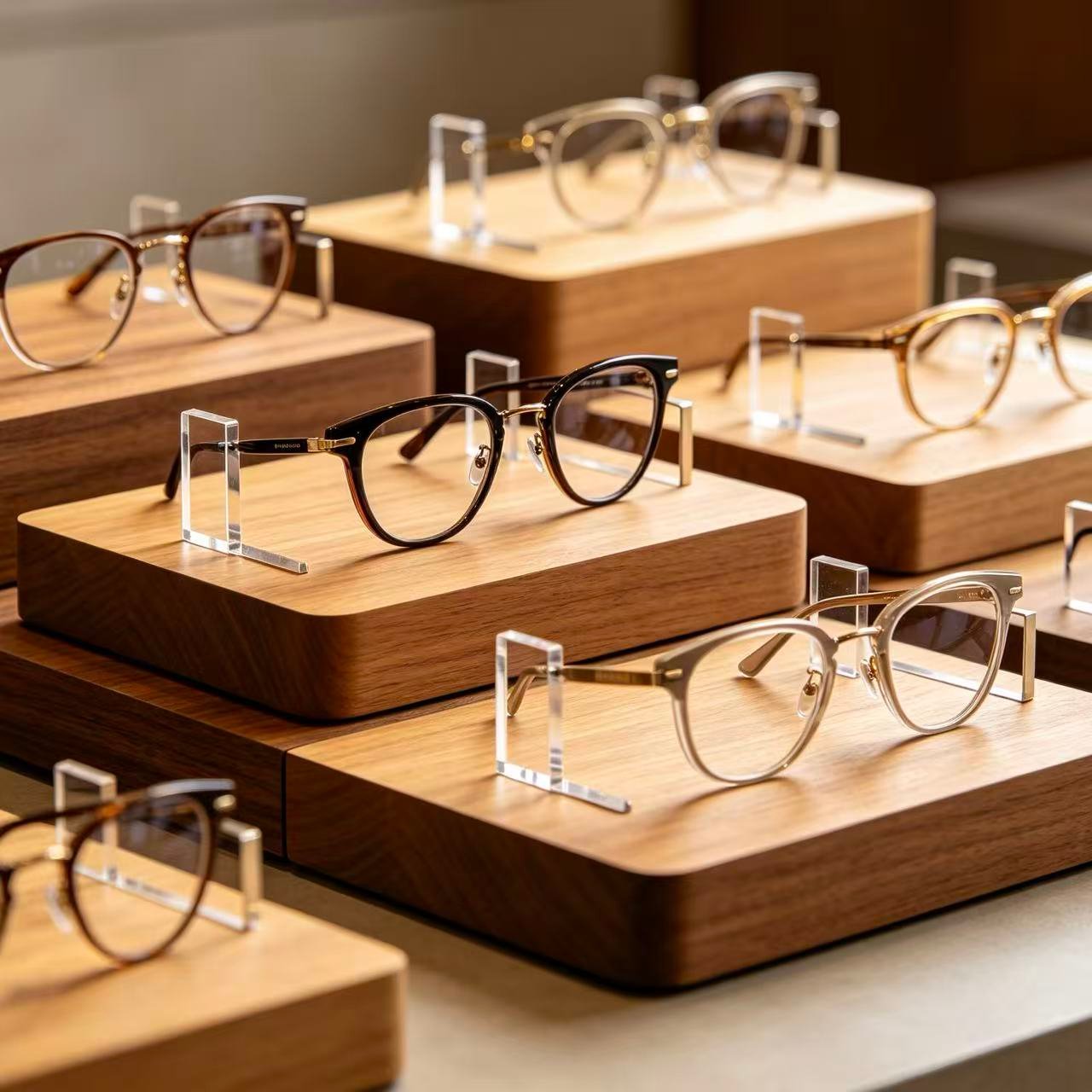
Finding the right partner to create your custom displays can feel like a huge challenge. Many people start by focusing only on the materials. They believe that if they just choose the most expensive or popular material, the result will be perfect. From my years of experience, I can tell you that this approach rarely works. A display that looks great in one store might look completely out of place in another.2 The real secret is to shift your focus from the "what" to the "who." It’s about finding a manufacturing partner who is more interested in your brand's story and goals than in just selling you a product. A good partner will help you navigate the choices to create something that truly works.
Shouldn't I Just Ask What the Best Material Is?
You think asking for the "best" material gets you quality. But this often leads to generic quotes and displays that don't fit your brand. Change your question to focus on your specific needs.
No, asking for the "best" material is a common mistake. Instead, you should be asking, "What material and design will best suit my brand's style, my store's environment, and my budget?" A great supplier will help you answer this, leading to a truly custom solution.
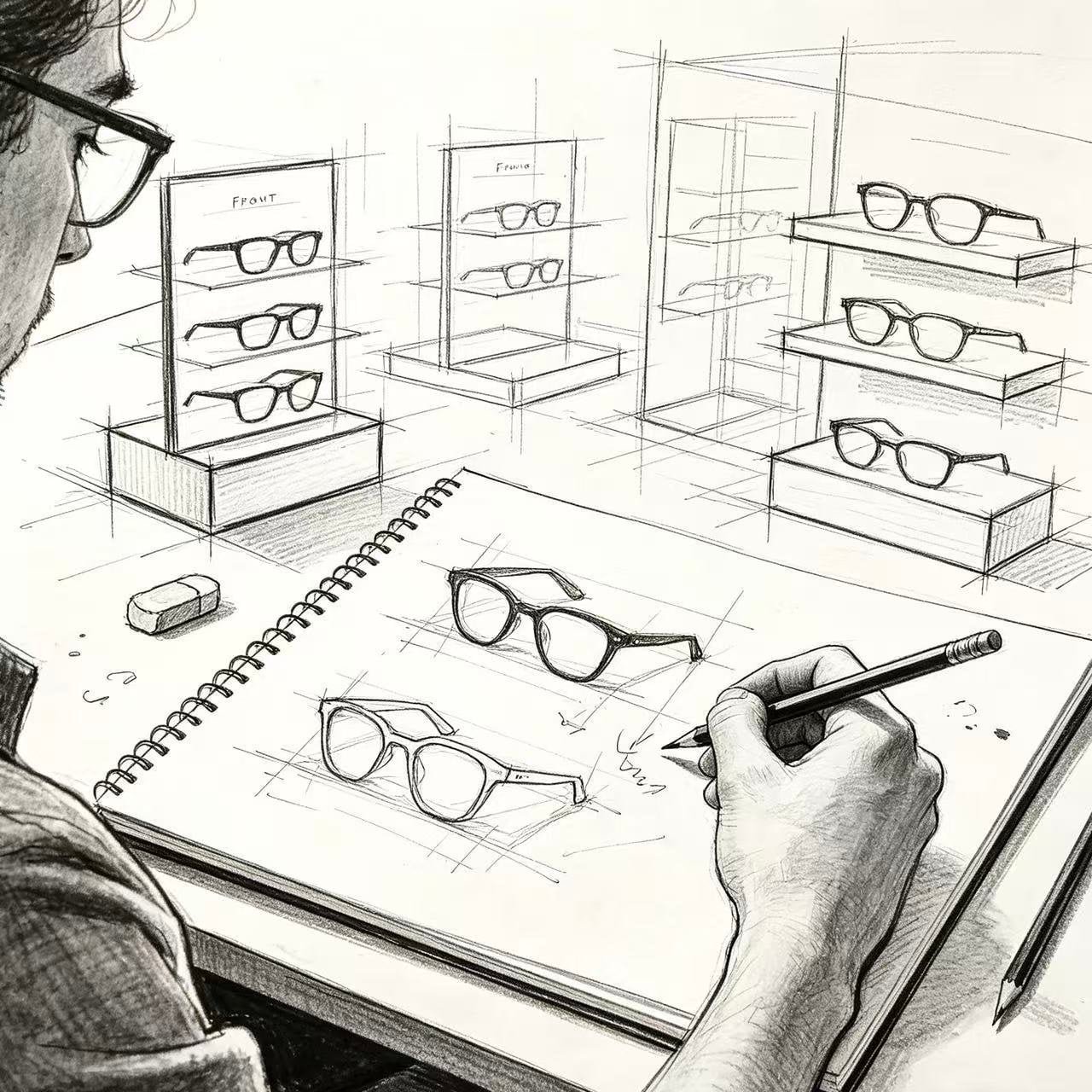
From our experience handling projects, the first question from clients is almost always, "What's the best material for a display stand?" While it seems like a logical place to start, it's actually the wrong question. There is no single "best" material.3 The right material depends entirely on your context. A supplier who immediately answers with "acrylic" or "wood" without knowing more is just trying to make a quick sale. The conversation should be about finding a solution, not just picking a material off a list. For example, a heavy, dark wood display might suggest heritage and quality for a luxury brand but would feel out of place for a fun, budget-friendly eyewear line. A better approach is to start with your goals and work backward.
Here’s a better way to think about it:
| What you might ask | What you should ask | Why it matters |
|---|---|---|
| "What's the best material?" | "My brand is about [e.g., sustainability, modern tech, classic luxury]. What materials would reflect that?" | This aligns the display with your brand's core message, creating a cohesive customer experience4. |
| "How much for an acrylic stand?" | "For a high-traffic area with bright lighting, what are the most durable and visually appealing options within my budget?" | This addresses practical needs like durability and appearance in its specific environment, preventing costly mistakes. |
How Can I Tell if a Supplier is Credible?
It's hard to know which suppliers are reliable. You worry about poor communication and low-quality products. The solution is simple: pay attention to the questions they ask you at the very beginning.
A credible supplier shows their expertise by the questions they ask.5 They won't just quote a price for "an acrylic stand." They will ask about your brand, your customers, and your store to provide a thoughtful recommendation that truly fits your needs.

A supplier's credibility is revealed in their first conversation with you. A partner who is invested in your success will act like a consultant, not just an order-taker6. When our team starts a new project, we don't begin by talking about our capabilities; we start by asking about the client's vision. The quality of their questions is the single best indicator of the quality of their work.7 They should be trying to understand your world. Do your glasses sell for $50 or $500? Is your store brightly lit with clean lines, or is it a warm, intimate boutique? These details are not small talk; they are essential design constraints8 that a professional supplier needs to know. A supplier who skips this step is likely using a one-size-fits-all approach, which is the enemy of effective custom display design.
A good partner will ask questions like:
- What is the price point and perceived value of your eyewear? A display for a luxury brand should use materials and finishes that convey premium quality9, while a display for a fast-fashion brand might prioritize color and a modern form.
- Can you describe your store's lighting and overall aesthetic? Polished acrylic can create stunning reflections in a well-lit modern space, but natural wood might offer a warm, inviting feel in a store with softer lighting.
- Will this display be in a high-traffic area? This determines the need for more durable materials like metal or thick acrylic to resist wear and tear.
Why Does a Low MOQ Matter for Custom Displays?
You need a small batch of displays for a new store or a test run. But most suppliers have high minimums, forcing you to over-commit. Look for partners who support low MOQs; it shows flexibility.
A low Minimum Order Quantity (MOQ) is about more than just cost. It signals a supplier has flexible production and a partnership mindset. This is critical for testing new designs, outfitting boutique stores, or creating unique one-off displays for events.

In the world of custom manufacturing, a supplier’s policy on Minimum Order Quantity (MOQ) speaks volumes. Many brands, especially those that are growing or testing new concepts, don't need 500 identical displays. The ability to order just one, five, or ten pieces is a game-changer. When a supplier offers a low MOQ, it's a strong sign that they have their own in-house workshops and skilled craftspeople10. They are set up for true customization, not just mass production. This flexibility is essential for strategic business needs. We often work with brands who want to pilot a new display design in a single flagship store before committing to a chain-wide rollout11. A low MOQ makes this possible without a huge financial risk. It allows brands to be more creative and responsive.
This flexibility brings several key advantages:
- Test and Innovate: You can afford to try a bold new design in a few key locations. If it works, you scale up. If it doesn't, you haven't wasted a massive budget on inventory.
- Outfit Unique Spaces: Boutique stores or special pop-ups often require one-of-a-kind fixtures. A low MOQ allows you to create these show-stopping pieces that make a big impact.
- Manage Cash Flow: You don't have to tie up your capital in hundreds of displays that will sit in a warehouse12. You can order what you need, when you need it.
Conclusion
Choosing the right custom display is about finding a capable partner who understands your brand. A supplier's questions and flexibility are your best guides to a successful project.
"[PDF] The Impact of Visual Cues and Service Behavior on the Consumer ...", https://digitalcommons.usu.edu/cgi/viewcontent.cgi?article=1210&context=honors. Research on retail atmospherics and visual merchandising supports that physical store cues can shape consumers’ perceptions of store image and brand meaning; the evidence is contextual because it addresses retail environments broadly rather than eyeglasses displays specifically. Evidence role: general_support; source type: paper. Supports: Retail environment and display cues can influence consumer perceptions of store or brand image.. Scope note: Contextual support from broader retail-environment research, not direct proof for eyewear displays. ↩
"(PDF) Store Atmospherics: A Multisensory Perspective - Academia.edu", https://www.academia.edu/26634869/Store_Atmospherics_A_Multisensory_Perspective. Servicescape and retail-atmospherics studies indicate that consumer evaluations are affected by the congruence of physical cues within the store environment; this supports the contextual logic of display selection but does not evaluate a specific eyewear-display design. Evidence role: mechanism; source type: paper. Supports: Consumer reactions to retail design elements are influenced by fit with the broader servicescape and store atmosphere.. Scope note: Contextual support; not specific to one material or eyewear retail. ↩
"Material selection - Wikipedia", https://en.wikipedia.org/wiki/Material_selection. Material-selection literature describes material choice as a multi-criteria decision involving performance, cost, processing, and design constraints, supporting the claim that no material is universally best; the source provides a general engineering framework rather than retail-display-specific evidence. Evidence role: expert_consensus; source type: education. Supports: Material selection is typically based on matching material properties to functional, aesthetic, economic, and environmental constraints.. Scope note: General design-engineering support, not eyewear-display-specific. ↩
"[PDF] The Impact of Visual Cues and Service Behavior on the Consumer ...", https://digitalcommons.usu.edu/cgi/viewcontent.cgi?article=1210&context=honors. Brand-experience research supports that consumers form impressions through multiple coordinated brand touchpoints, including physical environments; this supports the role of aligned displays in customer experience, though it does not isolate eyeglasses displays as the causal factor. Evidence role: general_support; source type: paper. Supports: Consistency among brand cues and retail touchpoints contributes to consumer experience and brand interpretation.. Scope note: Supports the broader brand-touchpoint mechanism rather than the specific display example. ↩
"A cost effective communication model for requirements elicitation in ...", https://pmc.ncbi.nlm.nih.gov/articles/PMC10618438/. Studies of requirements elicitation and supplier relationship management identify early information exchange and communication quality as important contributors to project alignment; this context supports using supplier questions as a credibility signal but does not prove it is a definitive test. Evidence role: general_support; source type: paper. Supports: Effective requirements elicitation and supplier communication are associated with better project alignment and supplier performance.. Scope note: Contextual support; supplier questions are one indicator, not a validated standalone measure. ↩
"[PDF] Evaluation of Early Supplier Involvement in Product Development", https://docs.lib.purdue.edu/cgi/viewcontent.cgi?article=1029&context=techmasters. Research on early supplier involvement in product development indicates that supplier knowledge and collaboration can improve design decisions and project outcomes; the evidence is contextual because it concerns product development generally rather than retail eyewear fixtures specifically. Evidence role: expert_consensus; source type: paper. Supports: Collaborative supplier involvement can improve design and development outcomes when suppliers contribute knowledge early.. Scope note: General product-development evidence, not a direct study of display suppliers. ↩
"Requirements Elicitation in Government Projects - arXiv", https://arxiv.org/html/2404.05425v1. Empirical and practice-oriented requirements-engineering literature links effective requirements elicitation with improved project outcomes; this supports the importance of supplier questions, but it does not establish that question quality is the single best predictor of workmanship. Evidence role: general_support; source type: paper. Supports: High-quality requirements gathering is associated with better project outcomes.. Scope note: Does not substantiate the superlative wording; only supports the underlying importance of requirements elicitation. ↩
"Product Design and UXD: Setting Up a Successful Collaboration", https://designcreativetech.utexas.edu/product-design-and-uxd-setting-successful-collaboration. Design-method references define constraints as requirements or limits, including function, context, cost, and environment, that guide feasible design solutions; this supports treating store lighting, price point, and traffic as design constraints, though it does not prescribe a specific display material. Evidence role: definition; source type: education. Supports: Design constraints include contextual, functional, economic, and environmental requirements that shape design decisions.. Scope note: General design-method support rather than a fixture-specific standard. ↩
"(PDF) Perception of Luxury and Product Quality in Package Design", https://www.researchgate.net/publication/389548949_Perception_of_luxury_and_product_quality_in_package_design_Examining_the_effects_of_white_space_typeface_and_visual_texture. Consumer and product-design research shows that material properties and surface finishes can affect perceived quality and value, supporting the claim that display materials may signal premium positioning; the evidence is indirect because it concerns material perception broadly rather than eyewear displays alone. Evidence role: mechanism; source type: paper. Supports: Material properties and surface finishes can influence perceived quality, luxury, or value.. Scope note: Indirect support from material-perception research. ↩
"Versatile waste sorting in small batch and flexible manufacturing ...", https://pmc.ncbi.nlm.nih.gov/articles/PMC11782652/. Operations-management literature associates low-volume customization with flexible manufacturing systems, make-to-order processes, and adaptable labor capabilities; this provides contextual support for the inference, but it does not prove that any supplier offering low MOQs owns in-house workshops. Evidence role: general_support; source type: paper. Supports: Small-batch and make-to-order production are associated with flexible manufacturing capabilities and skilled production processes.. Scope note: Contextual support only; low MOQ is not definitive evidence of in-house production. ↩
"Prototyping, experimentation, and piloting in the business model ...", https://www.sciencedirect.com/science/article/pii/S0019850121002509. Innovation-management and field-experiment literature supports pilot testing as a method for learning about performance before broader implementation; this supports the rationale for testing a display in a flagship store, though it does not quantify the financial benefit for eyewear retailers. Evidence role: mechanism; source type: paper. Supports: Pilot tests and field experiments help organizations learn before scaling an intervention or design.. Scope note: Supports the testing logic, not the specific financial outcome in eyewear retail. ↩
"Inventory Management", https://www.uky.edu/~dsianita/300/inventory. Operations and inventory-management sources explain that holding inventory ties up working capital and creates carrying costs such as storage, financing, and obsolescence risk; this directly supports the cash-flow concern, although the magnitude depends on order size and business context. Evidence role: mechanism; source type: education. Supports: Inventory requires working capital and creates carrying costs, including storage, financing, and obsolescence risk.. Scope note: Directly supports the financial mechanism, but not a specific cost estimate for display inventory. ↩